Pull up three different listing sites for Plaza Midwood on the same day and you'll get three different stories. One shows a median sale price of $825,000 as of November 2025. Another puts the February 2026 median at $985,000, with an average sale price over $1.09 million. A third reports Plaza Midwood homes listed to buy in August 2026 at a median of $799,000, a 13 percent drop from the month before. These aren't typos, and they aren't proof that the market is confused. They're proof that "Plaza Midwood" is not one housing market. It's three, stacked inside a single zip code, and every portal is quietly measuring a different mix of the three depending on what happened to be listed that month.
If you're comparing a specific house to "the Plaza Midwood median," you're comparing it to a number that may have nothing to do with the product you're actually looking at.
A Neighborhood Built in Two Different Centuries
The clearest evidence of this split shows up in the build dates. Recent sales data on single-family homes in the Midwood subdivision put the range of construction years at 1920 to 2026, with a median build year around 2003. Lot sizes run from 0.08 acres up to 0.6 acres, with a median around 0.2 acres. Sale prices over the same period ranged from $350,000 to $2.43 million.
A median build year of 2003 in a neighborhood famous for its 1920s Craftsman bungalows tells you something the marketing copy doesn't: roughly half of what's selling under the Plaza Midwood name was built well after the streetcar-suburb era ended. The historic bungalow you picture when someone says Plaza Midwood is competing, price-wise, with architect-series infill built last year on a lot the same size.
That split breaks down into three distinct products, and each one prices differently.
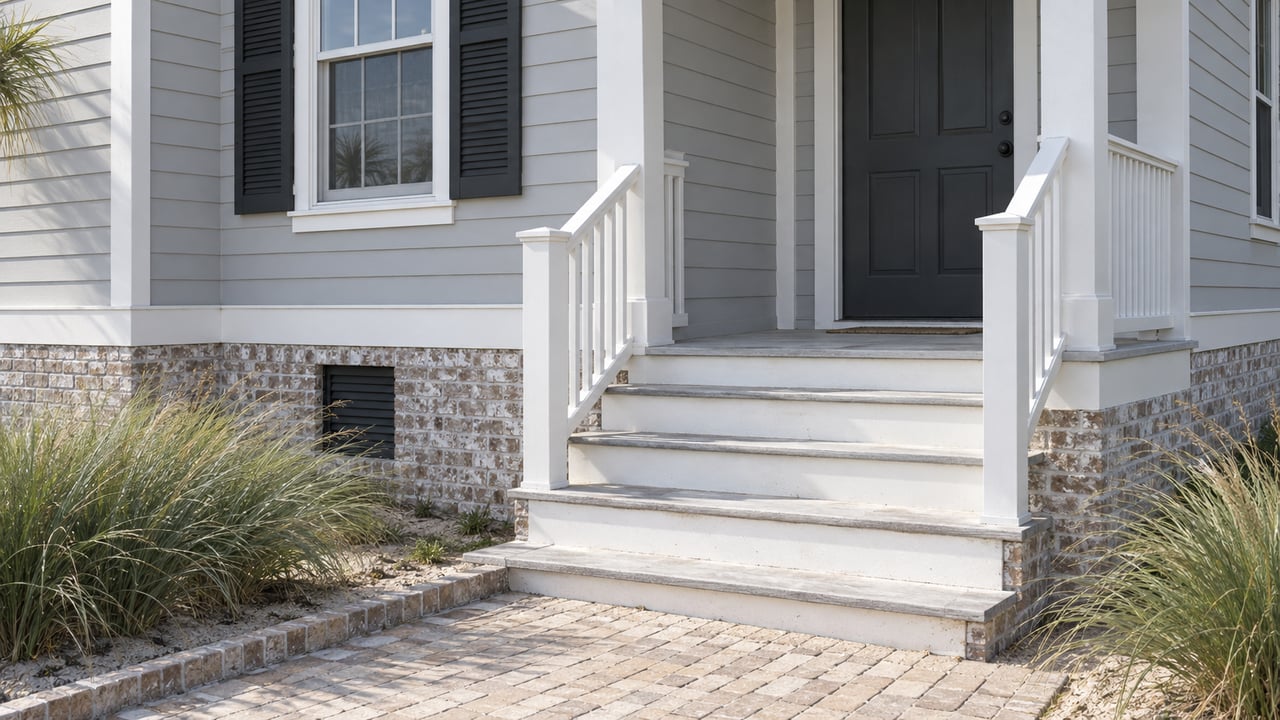
The original bungalow. Built between roughly 1920 and the 1940s, typically on a lot under a quarter acre, often without a garage. Renovated examples in the Commonwealth and Chantilly sub-neighborhoods tend to command a premium because those pockets offer slightly more square footage than the tightest bungalow blocks while staying walkable to Central Avenue. Buying here usually means buying character and accepting a renovation timeline, or paying up for someone else's already-finished one.
The infill build or duet. New construction and attached "duet" homes concentrated near the Gold Line stops and the Commonwealth corridor. These typically come with the two-car garage and fenced yard that the historic stock almost never has. One recent listing described a 2022-built duet as having the rare Plaza Midwood trifecta: a true two-car garage, a private fenced yard, and a walkable front door. That combination is rare specifically because most of the neighborhood's original lots weren't built with cars, let alone two of them, in mind.
The teardown lot. A smaller but real slice of the market: a listing where the existing home is explicitly marketed as a teardown, with the pitch being the land itself, often pointing to a multimillion-dollar new build a few doors down as proof of what the lot could become. This is the segment responsible for the top end of that $350K to $2.43M range. It isn't priced like a house. It's priced like a buildable parcel with a structure on it that happens to still be standing.
Why a Buildable Lot Exists Next to a 1915 Landmark
Part of the reason all three products can occupy the same short block comes down to zoning. One recent Plaza Midwood lot listing, a 0.12-acre parcel on Hamorton, specified an N1-C zoning designation that would allow a new build once local requirements are met. That kind of zoning is what lets a small, cleared lot become a legal new build next to homes that predate the interstate highway system.
It cuts both ways for historic character. Plaza Midwood is also home to protected landmarks like the Kilgo House on The Plaza, designed by architect Louis H. Asbury and completed in 1915 as the residence of Bishop John C. Kilgo, a former president of Trinity College, now Duke University. New construction near a protected estate, like the townhomes built adjacent to the historic VanLandingham property, went through Historic District Commission review to make sure the design complemented what was already there. So the neighborhood has both a zoning code that opens the door to more infill and a historic district process that constrains what infill can look like once it arrives. Buyers evaluating a specific lot need to know which of those two forces applies to it, because they point in opposite directions.
What the Three Products Actually Look Like Side by Side
| Original Bungalow | Infill / Duet | Teardown Lot | |
|---|---|---|---|
| Typical build era | 1920s-1940s | 2015-present | Existing structure, priced for replacement |
| Typical lot size | Under 0.2 acre | 0.12-0.4 acre | Varies, marketed by acreage |
| Garage | Often none | 1-2 car standard | N/A until rebuilt |
| Where to look | Commonwealth, Chantilly | Near Gold Line stops, Commonwealth corridor | Scattered, individually marketed |
| What you're really buying | Character plus a renovation decision | Move-in condition plus HOA-style density | Land value plus a construction project |
The Transit Bet Buyers Are Making Without Realizing It
Part of the premium buyers pay for infill near the Gold Line assumes the line keeps expanding. That assumption deserves a second look. The CityLYNX Gold Line's current eastern terminus sits at Sunnyside Avenue in Plaza Midwood, reached when Phase 2 opened in August 2021. A third and final phase would extend the line further, but the most recent available reporting, from early 2026, described the project as still unfunded and without a set construction timeline, following merchant pushback over construction disruption ahead of a 2025 referendum. You can track the project's current status directly through the Charlotte Area Transit System's own Gold Line page.
That matters if part of your reasoning for paying up on a duet two blocks from the current line is betting on rail eventually reaching further into the neighborhood. The infrastructure that exists today is real and reliable. The infrastructure that might extend it isn't funded, and there's no date attached to it.
What This Means Before You Compare Yourself to "The Median"
The next time you see a Plaza Midwood median price, ask three questions before you decide whether it's relevant to the house you're actually considering. What year was it built? What's the lot size? What zoning does it sit under? A 1930s bungalow on a 0.08-acre lot in the historic core and a 2024 duet on a 0.15-acre parcel near Commonwealth are both legitimately "Plaza Midwood," and neither one's price tells you anything reliable about the other's value. Charlotte's citywide median sat at $412,500 as of May 2026. Plaza Midwood trades well above that in every version of the data, but which version you should trust depends entirely on which of the three products you're standing in front of.
Does a bigger lot in Plaza Midwood always mean an older bungalow? Not necessarily. Some of the largest available parcels recently marketed in the neighborhood were cleared, level lots built specifically for new construction, including one nearly half-acre site on Country Club Drive offered with a choice of nine architect-designed floor plans. Lot size alone doesn't tell you the era of what's on it or what's allowed to replace it.
Is the Gold Line extension actually going to reach further into Plaza Midwood? It's planned but was still unfunded as of the most recent available reporting, from early 2026, with no construction date set. Treat any transit-extension premium as a possibility, not a certainty, when you're comparing prices.
Plaza Midwood rewards buyers and sellers who know which of its three markets they're actually standing in. A comp from the wrong one will mislead you by six figures before you've even made an offer. If you're trying to figure out what a specific Plaza Midwood address is really worth, given its build year, lot size, and zoning designation, Galarde & Co. can walk through the comparison with you and help you price it against the right market, not the average of all three.